Thursday, May 7, 2015

Welcome Home

After a red-eye 2:25am flight, followed by another one to N’Djamena, I was pretty tired. But the following day, I got up at 6am and headed to the bus station to take the 7-hour ride down to Moundou.

I sat beside a young Muslim woman who immediately offered me a mango. We talked a little and I found that she was studying in the equivalent of grade 9. She was friendly and sometimes translated the Arabic movie that was playing loudly on the bus. The bus stopped at Bonghor (the normal halfway stop) and she invited me to eat with her. I’m always cautious not to eat/drink too much on this bus trip but I followed her. She paid for 2 dishes- one was cow meat, and the other was cow stomach with bread. We ate and then it was time to get back on the bus. At the end of the trip we parted ways, but I was so happy that I had travelled with such a caring and kind companion.

When I arrived at my compound, I received hugs and smiles from everyone around. It was so nice to be back, and I hadn’t realized just how happy it made me to see everyone. I shared presents and stories with them, and enjoyed the small things here like playing with children and eating mangoes.


With only ten weeks left, I really wanted to live each day fully so I would not have any regrets. I was excited to spend a lot of time in the kitchen as well as at school working hard and learning. But first, there was the problem of me being sick. It started out just feeling like a cold- runny nose and cough. But by the next morning I was vomiting, had fatigue, and diarrhea. So I went to the clinic where I found out that I had malaria and worms. With a few days rest and many pills later, I’m mostly better. I look forward to the next two months and hope to continue to teach and learn new things everyday, with my Chadian friends and family.

Friday, April 24, 2015

The Ants Go Marching

We went to Nyungwe Forest which is a rainforest in the south of Rwanda. It is a rainforest with gorgeous views where you can see both Burundi and the Congo. Before leaving for our walk we were informed that there were ants and that it would make sense to wear rainboots or shoes. But I did not want to get my shoes dirty and Laura also decided to wear sandals so off we went. 

It had rained all morning and so the trails were slippery. I was happy that they provided walking poles as it helped me keep my balance numerous times. But sure enough just as our guide had promised there were ants in certain places. Unfortunately, at the bottom of one especially slippery hill there were hundreds of them. I managed to go quickly through them and had only about 20 on me. Laura managed to fall in them and we spent the next 10 minutes getting ants off!


We took a 5 hour drive along the coast from Kamembe to Kibuye. The views were spectacular!


In Kibuye, we rented a boat and went to two islands- Napoleon's Hat, and Amohoro. On the first there were hundreds of fruit bats that inhabited the island. We hiked to the top of the island for some great views. Amohoro island was a beautiful island where we went for a swim.


Photo by Mark Tymm

Thursday, April 23, 2015

Camping in a Safari Park

After visiting Kigali for a couple of days, we woke up early to head to Akagera National Park in hopes of seeing a variety of animals. When the Chad SALTers were originally planning this safari, we thought there would be just the 4 of us going. But as people heard about it they wanted to join so we ended up with 15 people along for the ride- MCC workers from Rwanda, Burundi and the Congo.

It was fun to go camping in Rwanda. We slept in tents and ate, chatted and sang around a large fire. The following day we got up early to continue our drive. We ended up seeing many different animals!


A lesson in humility and sharing

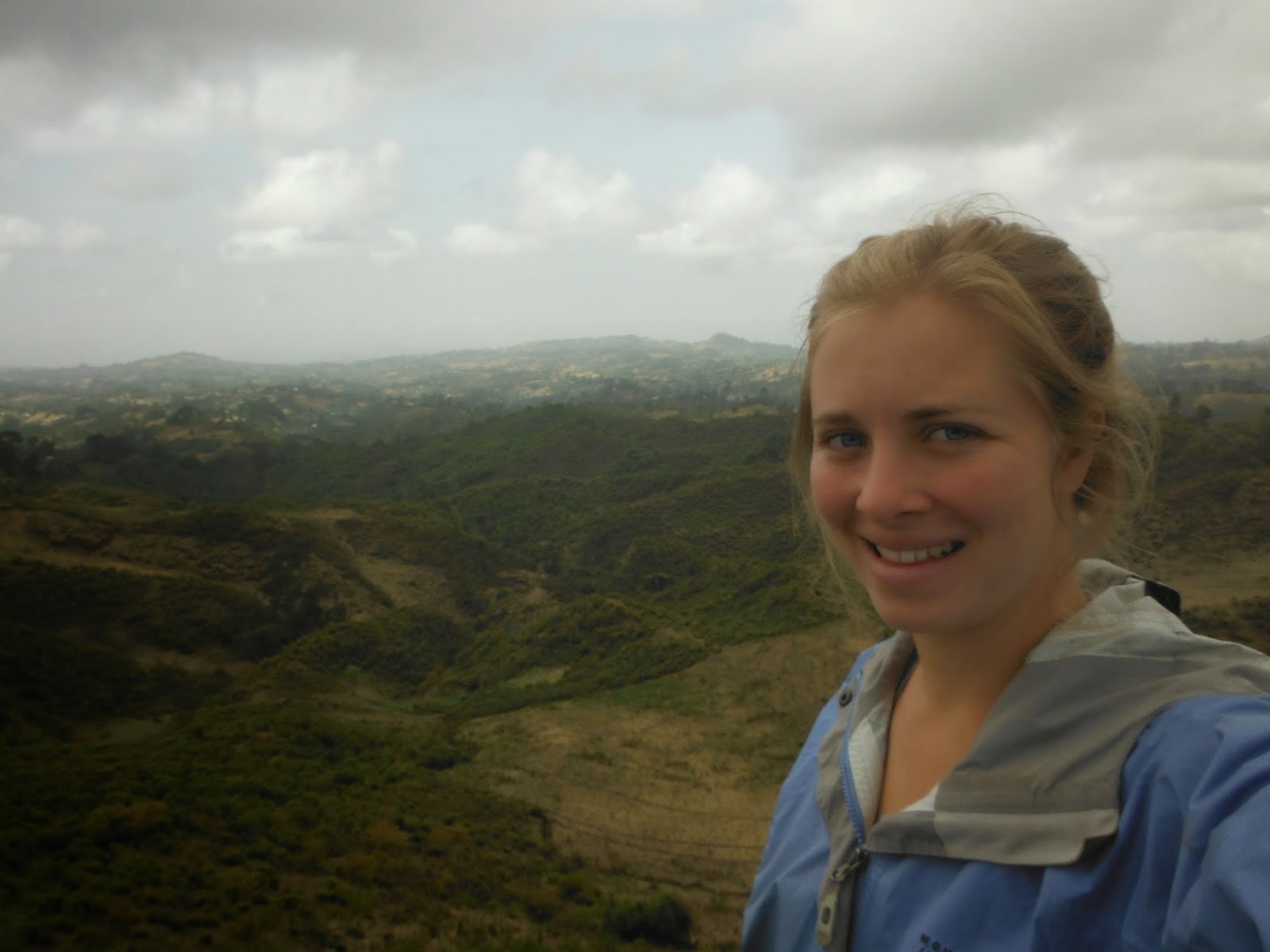
During the MCC Chad retreat in Ethiopia, we went to Crater Lake. The lake was about 2 hours from the lodge we were staying at. We planned to take horses up and down the mountain to the water and take a boat to the islands on the water. When we arrived to pay for our fees, we realized we did not have anywhere near enough money to pay for our planned trip. We decided to hike down the mountain and take horses up, and we asked if our driver had any money we could borrow from him. With that sorted out we began our hike down the mountain.


 The view was gorgeous and I really enjoyed the hiking. Part way down, we came across some children. They were eating tiny apples, and I began interacting with them. One girl about 8 years was eating and I pretended to take bites from it. Then all of a sudden she shoved the rest in my mouth. We both began to laugh. She speaks a local language and through the guide I understood that her name means Orange. We walked together with other local children for a while before saying our goodbyes. I was given another complete apple before continuing my journey.


Photo by: Mark Tymm (above and below)


We arrived at the lake and had the pleasure of being canoed across the lake to the Orthodox monastery by four men. On the island, we were greeted by locals who offered us fried barley, a popular Ethiopia snack usually eaten with coffee. It tasted very good. On our boat ride back, Angela (my boss) offered us (and the 4 boatman and guide) gummy bears. It was fun to see the Ethiopians try a yummy treat for North Americans.

We were greeted by small horses each being led by a guide. We took the horses up the mountain but once we arrived at the top, we realized that we should tip the men. Unfortunately at that point we had the equivalent of less than $2 to be split between 6 guides. It was humbling for them to except our money even though it was not an appropriate amount, but we had run out of money.

Overall, it was a lovely day where we enjoyed great views, new friends, and people who shared and took care of us!

Saturday, March 28, 2015

Mango Heat and a Surprise

(A year ago, I was trying to learn about Chad, and about what I would be doing during my SALT term, I read Kelsey’s blog (SALTer 2013-2014) entitled ‘Mango heat’ and I wanted to honour that great title today.)

Since I arrived at the end of August, the question most asked by people is how is the heat? When I reply (sometimes with ‘it’s ok’, and sometimes with ‘it’s pretty hot’), their response is always wait for the hot season which different people told me was anywhere from February to May. I made it through February no problem, and I thought that if this was as hot as it would be I would be just fine. Then mid-way through March, temperatures began to climb, and climb until most days it reach in the low 40’s.

Now this is very hot, but in Canada we have something called air conditioning or at the very least fans. But when there is little electricity, you are cooking over a charcoal fire, and your room is like a sauna- as is the case here in Chad, life becomes difficult. We do manage by sleeping outside, trying to stay in the shade, and when possible having a nap mid-day.

The good news about the hot season is the mangoes! I love mangoes and it has been a real treat to be able to buy 3 mangoes for the equivalent of 20 cents! I am happy to be able to eat mangoes on a regular basis.

Surprise!

It has been a long time since I have had rain. I remember when there were massive puddles on the roads which made it almost impossible to get from place to place but that seems like a very long time ago. In the last couple days, there have been more clouds that have been dark. On March 25th, there were multiple people who looked at these clouds and said that it was going to rain. I did not believe them because I had heard that it may rain a couple times in May but the rainy season does not really start until June. I replied that if it rained I would dance.


We set up our mats and mosquito nets outside and we fell asleep. At 2:30am, we all awoke to the surprise of RAIN!  In reality it was a sprinkle but nevertheless, we took down our mosquito nets, and put away our mats. At 2:30 in the morning everyone was pretty tired, but I got my 5-year brother Junior and we did a little tired dance.

Tuesday, March 24, 2015

Paradise in Chad

Last week, I travelled to Doba, a small city about one and a half hours away from Moundou, with the MCC partner organization BAOBAB. BAOBAB works with MCC on many agriculture projects in a number of villages close to Moundou. We went to Doba to learn more about fish farming. There were two fish farms in Doba and we were hoping to observe them and get some practical information about how they work in hopes of starting a fish farm in one of the partner villages.

The first fish farm we went to began with 50 carp and it is estimated that there are now 100 000 fish. The man had to expand his farming area twice due to the rapid increase of fish. At the end of May, it will have been 24 months and he will begin selling the fish. I learned that he feeds the carp - papaya leaves, balls made of red millet flour and spinach, and occasionally pigeon poop. The water is drained once a week and new water is put in to help keep the container clean.

It was when we began discussing the importance of clean water that BAOBAB realised that this may be a problem in our villages. None of the villages have running water, and using a generator to get water from a well is very expensive. We are continuing to brainstorm other solutions for fish farms in villages without access to regular clean water.

We made our way to a second farm owned by Ngardingal André a retired banker. André has taken multiple trainings on how to fish farm and has become an expert on the subject. It was very interesting to hear his perspective on the matter and to see his current project. He is currently working on creating a “Paradis de Doba”. His dream is to have solar panels, mango, banana, and papaya trees, fish farms, rabbits, pigeons, chicken, geese and ducks (whose poop can feed the fish and fertilize trees). Even with very limited finances he continues to work hard slowly create his dream farm. He is hoping to one day build a training centre where he (with his friends) can train young people on fish farming, veterinary practices and finances. He believes in the importance of teaching young people the skills that he has acquired.

When we were leaving he cut a papaya from a tree to give to me. It was a small piece of paradise. André’s dreams give me hope for the future of agriculture in Chad.